
Game of War - Fire Age
Epic WarStrategy
2.7110.03K Reviews
- Version
- 12.2.2.671
- Installs
- 50.00M
- Age Rating
- Everyone 10+
Screenshots
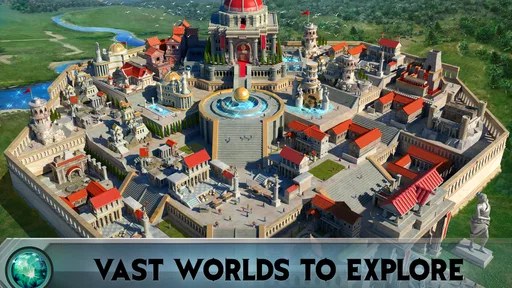
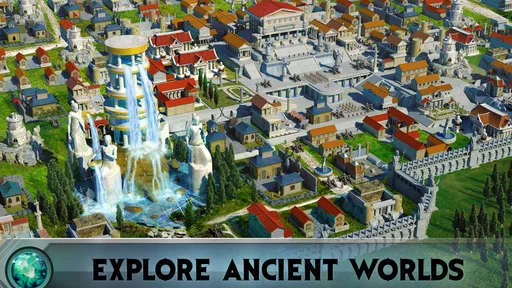
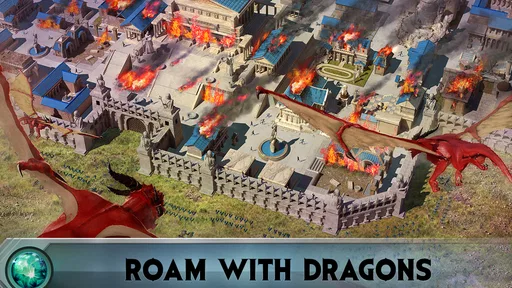
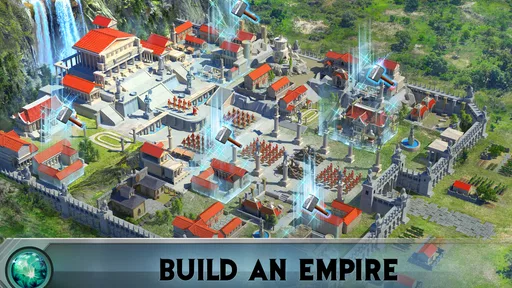
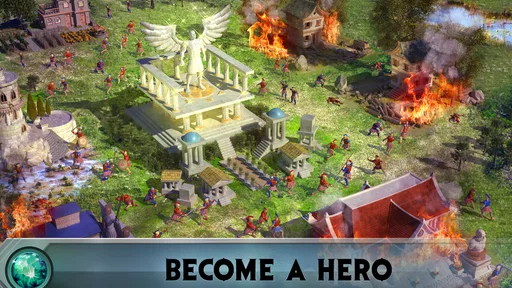
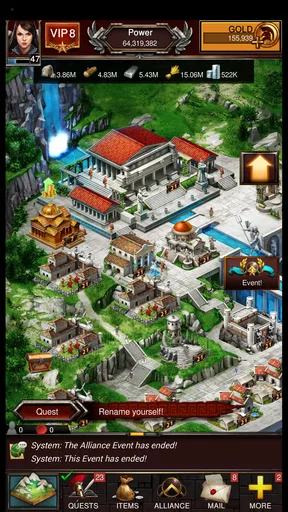
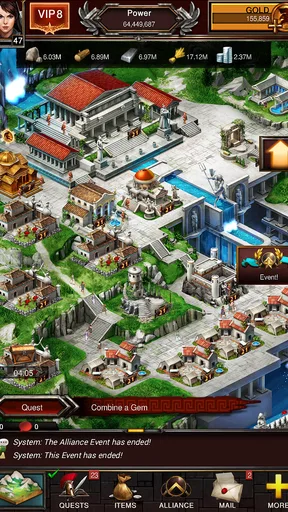
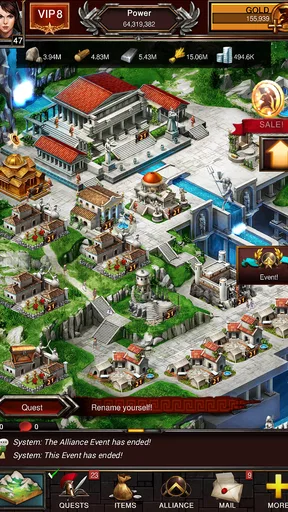
Our Review of Game of War - Fire Age
 Analysis by Appyee
I spent time with Game of War - Fire Age as a mobile strategy game, and my first impression was that it is built for players who enjoy a long-running world rather than quick matches. You develop a stronghold, manage your progress, prepare for conflict, and keep making decisions even when you are not in the middle of a battle. That structure can be absorbing, but it also asks for patience and attention in a way that many shorter strategy games do not.
The game comes from Epic War and is free to download, with optional purchases ranging from $4.99 to $99.99 per item. Its store promise focuses on becoming a legend, battling epic creatures, and finding rare treasure, but the day-to-day experience is less about one dramatic quest and more about building momentum over time. I found that distinction important: the exciting moments are connected to the preparation that comes before them.
How the current version feels to play
The current version is listed as 12.2.2.671, and the game remains a substantial presence in the mobile strategy space. It has passed 50 million installs, while its average rating sits at 2.7 from around 1.4 million ratings and roughly 110 thousand written reviews. Those figures suggest a divided audience, and my experience explains why. There is a lot here for a committed strategy player, but the design can feel demanding, slow, or commercially aggressive if you prefer a clean, self-contained game.
The central loop is easy to understand at first. I worked on my base, watched timers, improved my position, and thought about what would make the next stage easier. The challenge is not learning a complicated control scheme. It is deciding what deserves attention now and what can wait. Every upgrade competes with another possible use of time or resources, so small choices gradually shape the account.
That makes the game better suited to short visits throughout the day than to one long sitting. I could check progress during a break, start another task, and return later to make the next decision. A realistic routine would be opening the game in the morning to collect completed work, setting up a longer improvement before commuting, and checking again in the evening when there is enough time to plan the next move. It becomes a habit rather than a traditional match.
The fantasy setting gives the strategy layer a recognizable identity. Creatures, treasure, and the idea of rising into a legendary role provide a reason to keep pushing forward. Still, the strongest motivation for me was not the story. It was the feeling that a careful decision today could make tomorrow’s development more efficient. Players who want a narrative adventure with constant action may find the pace too administrative.
Progress requires planning, not just tapping
One useful way to approach the game is to stop treating every available improvement as equally valuable. I learned to think in terms of bottlenecks: the one resource, prerequisite, or waiting period that is holding back several other goals. Spending everything immediately can leave the account looking busier without actually becoming stronger. Saving enough flexibility for the next important step is often more useful than chasing a visible but low-impact improvement.
Another practical habit is to group decisions around your real schedule. If I knew I would be away from the phone for several hours, I preferred to begin something that could make use of that time. When I only had a few minutes, I avoided starting a chain of decisions that would require constant checking. This sounds simple, but it prevents the game from turning every spare moment into an obligation.
The same principle applies to combat preparation. I would not treat an attractive target or event as an automatic opportunity. The better question is whether the action fits the resources and time already available. Rushing into a fight can create a short burst of excitement while weakening the next round of development. The game rewards players who can separate a tempting action from a strategically useful one.
What the long-running version means for new players
Because this is an established title, a newcomer is entering a mature ecosystem rather than a brand-new experiment. That can be positive: there is a recognizable structure to learn, and the game has had time to develop its identity. It can also make the first hours feel less welcoming than a modern strategy title designed around a fresh start for everyone.
I recommend beginning with a narrow objective instead of trying to understand every system at once. Focus on learning how development affects your next meaningful goal, then observe which tasks support it. Keep notes mentally or on paper about what you are waiting for and why. This makes the interface feel less like a wall of buttons and more like a sequence of decisions.
New players should also decide early how they feel about optional spending. The game is free, but the presence of purchases from $4.99 to $99.99 means the experience should be approached with a clear personal limit. I would not install it for a child without discussing that limit first, even though the content rating is Everyone 10+. The age label describes suitability of content; it does not replace sensible control over purchases or screen time.
For someone who enjoys building an account over weeks or months, the large existing audience may make the world feel active and meaningful. For someone who wants a completely even starting line, instant access to every strategic option, or a game that can be finished in one evening, this is probably the wrong style of strategy game.
How it compares with simpler strategy alternatives
Compared with a compact tower-defense game, Game of War - Fire Age is less immediate. A tower-defense title usually gives me a defined map, a clear wave, and a conclusion within a manageable session. Here, the important outcome may be the position I create for a later session. That makes it more persistent, but also less satisfying when I only have ten minutes and want a complete result.
Compared with a turn-based strategy game, it offers a different kind of control. Turn-based games let me examine the board and make a move without waiting for a long development cycle. This game places more emphasis on timing, continuity, and returning to an evolving account. I prefer it when I want a background project; I prefer turn-based alternatives when I want every decision to have an immediate, visible consequence.
It also differs from quick competitive strategy games that measure success almost entirely inside a single match. Here, preparation and account development matter just as much as the moment of confrontation. That wider time horizon can make progress feel more personal, but it can also make setbacks feel heavier because they are connected to accumulated effort.
Where the game still creates friction
The biggest issue for me is the tension between free access and the pressure created by a long-term design. Waiting, planning, and resource management are part of the intended rhythm, yet players may feel tempted to spend when progress slows. Optional purchases do not automatically make a game unfair, but their price range makes it especially important to play with a budget and resist treating every delay as a problem that must be solved immediately.
The interface can also feel busy. A mature strategy game has many layers competing for attention, and that can make it difficult to identify the one action that matters most. I found myself enjoying the game more when I ignored secondary distractions and followed a simple priority list. Players who dislike notifications, timers, or frequent reminders may find the overall rhythm tiring rather than engaging.
The average rating of 2.7 is worth considering before downloading. It does not tell me that every player will dislike the game, but it does signal that the experience has significant friction for a sizeable part of its audience. I would interpret that rating as a reason to try it cautiously, avoid spending early, and decide based on the first few sessions rather than assuming the large install count guarantees a good personal fit.
There is also a social trade-off in the game’s long-term nature. A persistent strategy world can be more enjoyable when other players add energy and purpose, but that same structure may make the experience feel less private or relaxed than a solo campaign. If I want a game that never asks me to think about a wider community or ongoing competition, I would choose a more contained alternative.
What has changed over its life and what that means now
The title was released on May 7, 2014, and the listed version, 12.2.2.671, shows that it has continued to evolve rather than remaining frozen in its original form. I see that as evidence of a product with a long maintenance history, not as proof that every update will suit every player. A current version can improve stability, presentation, balance, or the way existing systems connect, while still retaining the foundational design that some people find frustrating.
For returning users, that distinction matters. An update does not necessarily turn a persistent strategy game into a quick, casual experience. The account-building rhythm, the need to plan around time, and the presence of optional purchases remain central considerations. I would return with realistic expectations: look for a smoother or more developed version of the same broad idea, not an entirely different genre.
Existing players should also reassess old habits after a version change. A routine that once worked may no longer be the most efficient way to spend attention, especially if priorities, rewards, or progression paths have shifted. Rather than repeating an old schedule automatically, I would spend a few sessions watching which actions now create the clearest progress. That is a more reliable way to adapt than assuming past experience remains perfectly current.
New users can benefit from this maturity, but they should not confuse longevity with simplicity. A game that has been active since 2014 may have more depth and context than a newly released mobile title. It may also carry more layers to learn. My advice is to judge the current version on how clearly it lets you make meaningful decisions, not on the age of the app alone.
Who should play it and who should skip it
I would recommend it to someone who likes persistent progress, fantasy battles, resource decisions, and the satisfaction of returning to a project that has changed since the last visit. It is especially suitable for a player who enjoys planning around a daily routine and does not need every session to end with a clear victory screen.
I would be more cautious recommending it to a player who wants a generous free-to-play experience with no pressure to accelerate. I would also steer away anyone who dislikes waiting, account maintenance, or games that can occupy mental space outside the actual play session. The same long-term structure that makes the game compelling for one person can feel like a chore to another.
Parents and younger players should pay attention to the combination of the Everyone 10+ rating and optional purchases. The content may be broadly accessible for that age category, but the in-app economy still deserves a conversation about limits. I would set a spending rule before play begins, not after an accidental purchase or an emotionally charged moment.
What I would watch before committing
If I were deciding whether to keep playing, I would watch three things. First, does the current progression give me meaningful choices, or am I only repeating routine collection and waiting? Second, can I enjoy the game without feeling that spending is the expected solution to every slowdown? Third, does the long-term structure fit naturally into my day, or am I checking it out of obligation?
I would also pay attention to how the current version treats returning players. A healthy ongoing game should give established users reasons to rethink strategy without making their previous effort feel pointless. Since the listed version is 12.2.2.671, the most useful test is personal: compare the way the game feels now with the reason you originally installed it. If the core loop still matches that reason, continued updates may be a benefit. If not, a different strategy format may serve you better.
My final view is mixed but clear. Game of War - Fire Age has a distinctive place among mobile strategy games because it turns development into a continuing commitment rather than a series of isolated matches. I enjoyed the planning, the fantasy framing, and the small satisfaction of making a future session easier through a smart decision today. At the same time, I found the waiting, busy presentation, and purchase pressure difficult to ignore.
My advice is to try it as a patient, budget-conscious strategy game, not as a quick fantasy adventure. Keep your spending boundaries firm, organize progress around your actual schedule, and judge the experience after you understand its rhythm. If that rhythm feels rewarding, the large world and long-term structure can keep you engaged. If you want immediate battles, transparent short sessions, or a fully self-contained campaign, another strategy game will probably be a better choice.
Verdict
Strengths of Game of War - Fire Age
- Large world map with plenty of territories and objectives to explore.
- Alliance features make cooperation, diplomacy, and group strategy rewarding.
- Frequent events provide new challenges and extra rewards for active players.
- Detailed city-building system offers many upgrade paths and strategic choices.
- Cross-platform availability helps maintain progress across supported mobile devices.
Limitations of Game of War - Fire Age
- Progress can feel slow without spending money on resource and speed-up packs.
- The interface may overwhelm new players with menus, timers, and notifications.
- High-level competition often favors established alliances and experienced players.
- Large updates and extended play sessions can consume significant storage and battery.
- Some events and rewards require frequent logins, which may feel demanding.
Other Releases by Epic War
View All
Mobile Strike
Strategy3.3
Similar Picks in This Category
View All
Clash of Clans
Supercell4.5

Plants vs. Zombies™
ELECTRONIC ARTS3.7

Lords Mobile: Kingdom Wars
IGG.COM4.5

Clash Royale
Supercell4.4

State.io — Conquer the World
CASUAL AZUR GAMES4.1

Car Driving School : Car Games
Spark Game Studios3.9
Frequently Asked Questions
What is Game of War: Fire Age?
Game of War: Fire Age is a real-time multiplayer strategy game focused on building an empire, training armies, researching technologies, and competing against other players. You manage a city, gather resources, complete quests, and join alliances for protection and coordinated attacks. The game combines base development with large-scale kingdom warfare and a persistent online world.
Can I play Game of War: Fire Age offline?
No. Game of War: Fire Age requires a stable internet connection because most of its features depend on live servers and interaction with other players. City upgrades, alliance activities, events, battles, rankings, and resource management are connected to the online world. A reliable Wi-Fi or mobile data connection is recommended, especially during major battles or time-limited events.
Is Game of War: Fire Age free to download and play?
The game is generally free to download and offers a free-to-play experience, allowing you to build your city, complete objectives, join alliances, and participate in battles without paying. However, it includes optional in-app purchases for items such as resources, speed-ups, special packs, and other advantages. Progress can be made without spending, although competitive advancement may take longer.
Does Game of War: Fire Age require joining an alliance?
Joining an alliance is not strictly required, but it is strongly recommended if you want to experience the game fully. Alliances provide assistance with construction and research, shared rewards, communication, reinforcements, and coordinated attacks or defenses. Players who remain independent can still develop their cities, but they may find it more difficult to compete against organized groups.
Is Game of War: Fire Age suitable for children?
Game of War: Fire Age is designed for a mature audience because it includes fantasy combat, competitive warfare, social interaction, and optional in-app purchases. The game may also involve frequent notifications and pressure to spend during limited-time events. Parents should review the store rating, use device-level purchase restrictions, and consider privacy and chat settings before allowing younger players to install it.
Play our best games!


